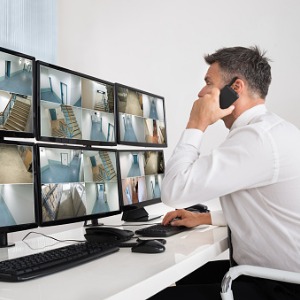
AI surveillance systems, automated access control, and video analytics platforms are changing how facilities are monitored and protected. Here's what that means for your career and what to do about it.
AI won't replace security guards; physical presence, situational judgment, and human response cannot be automated. But it is handling video monitoring, perimeter detection, and access control, shifting demand toward work that requires human expertise.
TASK LEVEL RISK
Most of the work stays human. AI assists at the edges.
AI is handling specific tasks. The core role is intact but shifting.
AI is automating significant portions of the work. Adaptation is essential.
 Higher risk
stationary surveillance camera monitoring, routine patrol logging and reporting, access badge verification at low-risk entries, alarm monitoring and notification, standard visitor log management
Lower risk
physical patrol and visible deterrence, emergency and active threat response, crowd control and event security, de-escalation and conflict management, executive protection, access control judgment calls
Security guards provide the physical deterrence, situational awareness, and human response that protect people and property. Recognizing the person behaving suspiciously before they act, managing the confrontation that could escalate, and providing the visible presence that deters crime require human judgment AI cannot replicate.
WHAT YOU SHOULD DO
Skills to build for the AI era
New skills - Adapt to the AI landscape
 New skills - Adapt to the AI landscape
Responding to fires, medical emergencies, active threats, and security incidents with trained protocols is the highest-value and most AI-resistant security skill.
Protecting patients, staff, and visitors in healthcare settings requires knowledge of mental health de-escalation, patient rights, and hospital security protocols.
Operating AI video analytics, automated access control, and threat detection systems while applying judgment to alerts and exceptions defines modern security guard practice.
Timeless skills - What AI can't replicate
 Timeless skills - What AI can't replicate
Using verbal and nonverbal techniques to prevent volatile situations from becoming dangerous requires the interpersonal skill, presence, and judgment that define effective security response.
Providing the visible presence and physical patrol that deters theft, vandalism, and unauthorized access requires the human physicality and attention AI surveillance cannot replace.
Reading people, environments, and situations to identify developing threats before they become incidents requires observational judgment built through experience that AI alerts cannot substitute.
THE FULL PICTURE
What AI can do, what it can't, and where the career is headed
What AI can already do
- Monitor video feeds across large facilities and alert guards to anomalous behavior or unauthorized access
- Automate access control decisions based on badge, biometric, or credential data
- Analyze crowd density and movement patterns at events and flag developing situations
- Generate automated patrol route logs, incident reports, and shift summaries
What AI can't do
- Physically stop someone accessing a restricted area.
- De-escalate the person who is visibly agitated and about to become dangerous.
- Respond to an active threat with the judgment and physical presence that protects people.
- Provide the visible deterrence that prevents incidents from happening in the first place.
Guards with emergency response, healthcare, and access control specialization are best positioned.
Do you have the right strengths for this career?
Our test measures your personality and strengths — and shows how you match with 1600+ careers.
Job outlook
BLS projects 3 percent growth for security guards from 2024 to 2034. Median annual wages were $36,680 in May 2024. Healthcare, corporate, retail, and events are primary employers. Demand for armed guards and specialized security in healthcare and critical infrastructure is growing.