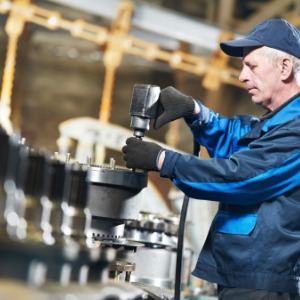
AI is already guiding robotic arms, inspecting parts with vision systems, and optimizing assembly line sequences. Here's what that means for your career and what to do about it.
AI won't replace machine assemblers, but it's already replacing some of the routine tasks they do. Factories increasingly use collaborative robots and vision systems for repetitive fastening and inspection. Dexterity, troubleshooting instincts, and hands-on judgment remain irreplaceable.
TASK LEVEL RISK
Most of the work stays human. AI assists at the edges.
AI is handling specific tasks. The core role is intact but shifting.
AI is automating significant portions of the work. Adaptation is essential.
 Higher risk
Repetitive fastening, standard part placement, basic visual inspection, torque application, routine kitting, barcode scanning
Lower risk
Custom prototype assembly, troubleshooting misaligned parts, retooling for new products, quality judgment calls, mentoring apprentices
Machine assembly requires tactile feedback, real-time problem-solving on the floor, and physical adaptability that current robotics still cannot reliably match.
WHAT YOU SHOULD DO
Skills to build for the AI era
New skills - Adapt to the AI landscape
 New skills - Adapt to the AI landscape
Program and safely work alongside collaborative robots from Universal Robots, FANUC, or ABB to complete shared assembly tasks.
Set up and verify AI-driven inspection cameras that detect defects, alignment issues, and missing components on the line.
Use tablet-based platforms like Tulip or DELMIA to follow adaptive instructions and log build data during assembly.
Diagnose issues across electrical, mechanical, and software systems when automated assembly cells stop or produce faults.
Timeless skills - What AI can't replicate
 Timeless skills - What AI can't replicate
Precise hand-eye coordination for delicate wiring, fastening, and part fitting that robotics still cannot reliably replicate.
Improvising practical fixes when parts, tools, or schedules go sideways, drawing on experience and hands-on intuition.
Recognizing subtle defects by touch, sound, and sight that automated inspection systems frequently overlook.
THE FULL PICTURE
What AI can do, what it can't, and where the career is headed
What AI can already do
- Guide robotic arms through repetitive assembly steps
- Inspect components using computer vision systems
- Optimize line sequencing and cycle times
- Detect defects and torque anomalies in real time
- Generate digital work instructions for assemblers
What AI can't do
- Feel when a fastener is cross-threaded or a part is slightly misaligned.
- Improvise fixes when tooling breaks or parts arrive out of spec.
- Mentor a new hire through the muscle memory of a complex build.
- Make safety judgment calls on an unpredictable shop floor.
- These are the core contributions of Machine Assemblers, and they remain entirely human.
Machine assemblers who learn to work alongside robots and vision systems will remain essential to any factory floor.
Do you have the right strengths for this career?
Our test measures your personality and strengths — and shows how you match with 1600+ careers.
Job outlook
The U.S. Bureau of Labor Statistics projects employment of assemblers and fabricators to decline about 4 percent from 2024 to 2034 due to automation. Demand remains strongest in aerospace, medical devices, and specialty machinery. Assemblers skilled in robotics, electromechanical systems, and precision instruments will have the best prospects.