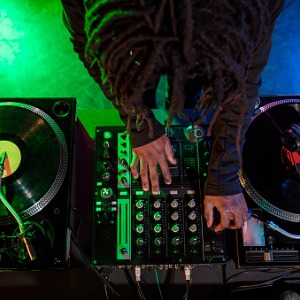
AI tools can generate beat-matched mixes, suggest track progressions, and produce music for background and streaming use. Here's what that means for your career and what to do about it.
AI will not replace professional DJs. Reading a crowd, building energy through a set, and the craft of live performance are human skills.
TASK LEVEL RISK
Most of the work stays human. AI assists at the edges.
AI is handling specific tasks. The core role is intact but shifting.
AI is automating significant portions of the work. Adaptation is essential.
 Higher risk
background music curation for retail and hospitality, automated playlist generation for streaming and corporate events, basic wedding and event DJ services, radio automation and format programming
Lower risk
live club and festival performance, crowd-responsive set building, original mix production and releases, brand and residency development, music curation and tastemaking, high-profile events and touring
DJs bring live performance craft, crowd intelligence, and cultural identity that audiences attend and pay for. Reading the room and making real-time musical decisions reflect human artistry and taste that automated systems cannot originate.
WHAT YOU SHOULD DO
Skills to build for the AI era
New skills - Adapt to the AI landscape
 New skills - Adapt to the AI landscape
Using AI-assisted mixing and harmonic analysis tools to enhance performance workflow while maintaining creative control.
Creating original tracks, edits, and productions that build a DJ's musical identity beyond performance into recording and releases.
Building a DJ identity through social media content, mix releases, and online presence to attract bookings and grow an audience.
Timeless skills - What AI can't replicate
 Timeless skills - What AI can't replicate
Beat matching, phrasing, and mixing technique are the foundation of professional DJing, developed through practice and live performance experience.
Reading a crowd's energy and making real-time musical decisions to build and sustain the right emotional arc is the defining skill of a professional DJ.
Deep knowledge of music history, genre, and emerging artists gives DJs the taste and authority that builds their reputation as cultural tastemakers.
THE FULL PICTURE
What AI can do, what it can't, and where the career is headed
What AI can already do
- Generate beat-matched transitions and mixing sequences from track libraries
- Suggest set progressions based on musical analysis and energy flow
- Produce AI-generated background music for streaming, retail, and ambient use
- Analyze BPM, key, and mood to assist with track selection
What AI can't do
- Read a live crowd's energy and adjust the set in real time.
- Develop the musical identity and taste that makes a DJ's sets distinctive.
- Create the human connection between performer and audience that drives club culture.
- Build the reputation and relationships that lead to bookings at significant venues.
The live performance and cultural tastemaker dimensions are highly resistant to automation.
Do you have the right strengths for this career?
Our test measures your personality and strengths — and shows how you match with 1600+ careers.
Job outlook
BLS does not separately report data for DJs, who fall within musicians and singers, projected to grow 4 percent from 2024 to 2034. Median hourly wages were $36.50 in May 2024. DJ income varies widely by market, with top professionals earning substantially more from bookings, residencies, and releases.